Meta Ads Strategy 2026:
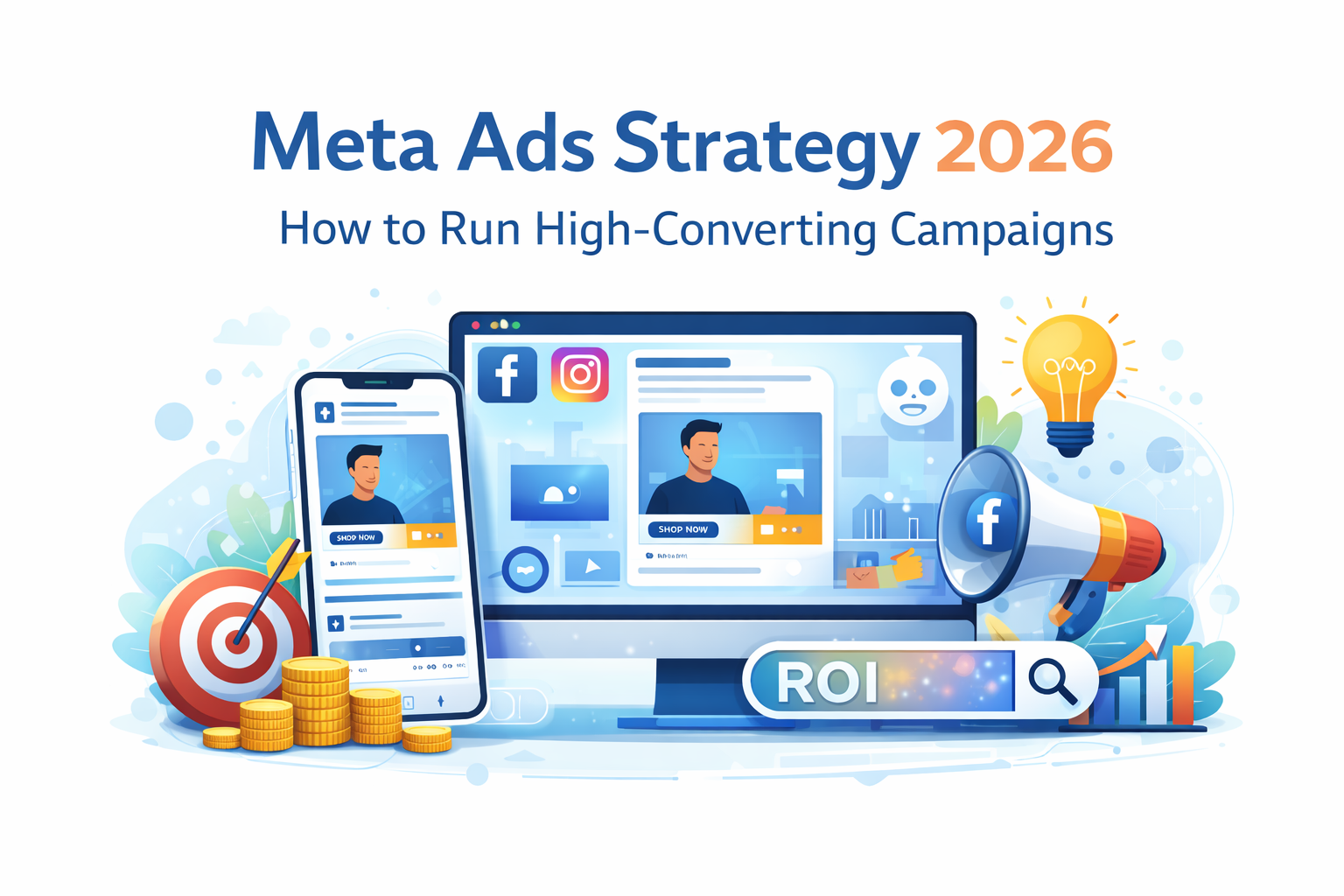
How to Run High-Converting Campaigns
In 2026, digital advertising is more competitive than ever, and businesses need smart strategies to stand out. Meta Ads (formerly Facebook and Instagram Ads) remain one of the most powerful tools for reaching targeted audiences and driving conversions. With advanced AI, better targeting options, and evolving user behavior, mastering Meta Ads is essential for success.
Let’s explore how you can run high-converting campaigns using Meta Ads in 2026.
1. Understand Your Target Audience
The foundation of any successful Meta Ads campaign is audience targeting.
You should focus on:
- Demographics (age, gender, location)
- Interests and behaviors
- Custom audiences (website visitors, email lists)
- Lookalike audiences
The more precise your targeting, the better your results.
2. Set Clear Campaign Objectives
Meta Ads offer multiple campaign goals such as:
- Brand awareness
- Traffic
- Engagement
- Leads
- Conversions
Choose your objective based on your business goal. For example, if you want sales, focus on conversion campaigns rather than just traffic.
3. Create High-Quality Ad Creatives
Your ad creative is what grabs attention.
Best practices:
- Use eye-catching visuals
- Write clear and compelling headlines
- Add strong call-to-action (CTA)
- Keep messaging simple and direct
Video ads and carousel ads perform especially well in 2026.
4. Leverage AI and Automation
Meta uses AI to optimize ad delivery.
Take advantage of:
- Automated placements
- Dynamic ads
- AI-based targeting
- Budget optimization
This helps improve performance and reduce manual effort.
5. A/B Testing is a Must
Testing different ad variations helps you find what works best.
Test:
- Headlines
- Images/videos
- Audience segments
- Ad copy
Even small changes can significantly improve results.
6. Optimize Landing Pages
Your ad is only half the journey—the landing page matters equally.
Ensure:
- Fast loading speed
- Mobile-friendly design
- Clear CTA
- Relevant content
A poor landing page can waste your ad budget.
7. Focus on Retargeting Campaigns
Most users don’t convert on the first visit.
Use retargeting to:
- Re-engage website visitors
- Target cart abandoners
- Show personalized ads
Retargeting campaigns often have higher conversion rates.
8. Budget Management & Scaling
Start small and scale based on performance.
Tips:
- Monitor ad performance regularly
- Increase budget for high-performing ads
- Pause low-performing campaigns
Smart budgeting ensures maximum ROI.
9. Track Performance with Analytics
Data is key to success.
Track:
- Click-through rate (CTR)
- Conversion rate
- Cost per click (CPC)
- Return on ad spend (ROAS)
Use insights to continuously improve your campaigns.
10. Follow Latest Trends
Stay updated with:
- Short-form video ads
- Influencer collaborations
- Personalized advertising
- Interactive ad formats
Adapting to trends keeps your campaigns competitive.
Conclusion
Meta Ads in 2026 are more powerful than ever, but success depends on strategy, creativity, and continuous optimization. By understanding your audience, using AI tools, and focusing on high-quality creatives, you can run campaigns that deliver real results.
If you apply these strategies consistently, you’ll be able to increase conversions, reduce costs, and grow your business effectively.
Audience Targeting in Meta Ads 2026: Reach the Right People at the Right Time
Audience targeting is the heart of successful Meta Ads campaigns. In 2026, with advanced AI and data-driven insights, Meta allows advertisers to reach highly specific audiences with precision. The better your targeting, the higher your chances of conversions and ROI.
Let’s explore how to master audience targeting in Meta Ads.
1. Core Audience Targeting
Core audiences allow you to target users based on basic details.
You can define:
- Age
- Gender
- Location
- Language
- Interests
- Behaviors
This is ideal for reaching new audiences who may be interested in your product or service.
2. Custom Audiences
Custom audiences help you target people who already know your business.
Examples:
- Website visitors
- App users
- Email subscribers
- Previous customers
These audiences are more likely to convert because they are already familiar with your brand.
3. Lookalike Audiences
Lookalike audiences allow you to reach people similar to your existing customers.
Benefits:
- Expands your reach
- Maintains high relevance
- Improves conversion rates
You can create lookalikes based on:
- Customer lists
- Website traffic
- Engagement data
4. Retargeting Strategy
Retargeting focuses on users who interacted with your brand but didn’t convert.
Effective retargeting includes:
- Showing abandoned cart ads
- Offering discounts
- Reminding users about products
This strategy significantly increases conversions.
5. AI-Based Targeting (Advantage+ in 2026)
Meta’s AI now automates targeting using advanced algorithms.
Features include:
- Automatic audience expansion
- Smart delivery optimization
- Real-time performance adjustments
This reduces manual effort and improves results.
6. Interest & Behavior Targeting
You can target users based on:
- Online activities
- Purchase behavior
- Interests (fitness, fashion, tech, etc.)
This helps you reach users who are more likely to engage with your ads.
7. Geo-Targeting for Local Businesses
If you run a local business, geo-targeting is essential.
Target users by:
- City or region
- Radius around your location
- Local events or trends
This ensures your ads reach nearby potential customers.
8. Audience Segmentation
Instead of targeting everyone, divide your audience into segments.
Examples:
- New users
- Returning customers
- High-value buyers
Each segment should have personalized ads for better performance.
9. Exclusion Targeting
Excluding certain audiences helps avoid wasting budget.
Exclude:
- Existing customers (for acquisition campaigns)
- Irrelevant users
- Low-performing segments
This improves ad efficiency.
10. Continuous Testing & Optimization
Audience targeting is not a one-time task.
You should:
- Test different audience groups
- Analyze performance
- Refine targeting regularly
Optimization leads to better ROI over time.
Meta Ads Creative Strategy 2026: Design Ads That Convert
In 2026, running Meta Ads is not just about targeting—the real game-changer is your ad creative. With increasing competition, users scroll quickly, and you only have a few seconds to grab attention. That’s why creating high-quality, engaging, and conversion-focused creatives is essential.
Let’s explore how to design Meta Ads that actually convert.
1. Focus on Scroll-Stopping Visuals
Your creative must capture attention instantly.
Best practices:
- Use bold colors and contrast
- Add motion (videos or animations)
- Highlight the main message clearly
- Keep design clean and uncluttered
The first 3 seconds decide whether a user stops or scrolls.
2. Use Short-Form Video Content
Video ads are dominating in 2026.
Why video works:
- Higher engagement
- Better storytelling
- Increased conversions
Tips:
- Keep videos under 15–30 seconds
- Add captions (many users watch without sound)
- Show product/service in action
3. Write Compelling Ad Copy
Your message should be simple, clear, and persuasive.
Structure:
- Hook (attention-grabbing first line)
- Problem (what user is facing)
- Solution (your offer)
- CTA (call-to-action)
Example CTA:
- Shop Now
- Learn More
- Get Started
4. Personalization is Key
Generic ads don’t work anymore.
Personalize by:
- Targeting specific audience segments
- Using relatable messaging
- Showing relevant offers
Personalized ads increase engagement and trust.
5. Use Carousel & Interactive Ads
Interactive formats perform better.
Types:
- Carousel ads (multiple images/products)
- Collection ads
- Instant experience ads
These formats allow users to explore more within a single ad.
6. Highlight Benefits, Not Just Features
Users care about what they gain.
Instead of:
❌ “High-quality product”
✅ “Save time and boost your productivity”
Focus on outcomes and results.
7. Build Trust with Social Proof
Trust is a major factor in conversions.
Add:
- Customer reviews
- Testimonials
- Ratings
- Case studies
This builds credibility and reduces hesitation.
]8. Mobile-First Design
Most users are on mobile.
Ensure:
- Vertical format (9:16)
- Large readable text
- Fast loading visuals
- Clear CTA buttons
Mobile-optimized ads perform better.
9. Consistent Branding
Your ads should reflect your brand identity.
Maintain:
- Same color palette
- Logo placement
- Tone of voice
Consistency builds brand recognition.
10. Test Different Creatives
Don’t rely on one ad.
Test:
- Different images/videos
- Headlines
- Ad formats
- CTA buttons
Creative testing helps identify what works best.